you’re so afraid to tell people how you feel because you fear rejection, so you bury it deep inside yourself where it only destroys you more. you think it keeps things okay but it doesn’t. at some point you’ve got to realize that this is only making things worse. the truth can be scary, or it can be freeing.
So I was out to eat and this child(maybe 3 years old) in the booth next to us started crying loudly. The mom tried to calm him down but he started to go into tantrum mode and fussed even more. So she picked him up and walked out of the restaurant to a bench outside our window. We could hear her ask him, “look at me, what’s upsetting you?” To which he responded with more crying. So she says, “Well you’re clearly overwhelmed, so we’re going to sit out here and take a break until you can compose yourself and tell me what’s wrong.” Which is exactly what happened after a couple minutes. Anyways I just think it’s so good to speak to your children in a logical, respectful manner instead of shushing them and leaving them to deal with their stress alone.
this is such a surreal way to calm a child down like is a three year old really going to understand you like that ….
Yes, if it’s what they’re used to. It has to be consistent though, you can’t, like, suddenly start doing it one day and expect them to understand.
It also helps if you kind of narrate your own emotions when you’re upset even just over little things, like ‘oh! I just can’t get this to lay flat, but I really want to! I got mad because I couldn’t get it to work, and that’s frustrating!’
It feels silly at first, but it models it for them and helps them understand how to communicate (and recognize) their own emotions.
I think I reblogged the original post before, but I love and appreciate the further explanation. All in all this is a great practice, but some parents either don’t do it consistently, or aren’t taking in other factors (like, can your child process your words right now? Sometimes they can’t because EMOTIONS!) OR they do this without removing them from the stressor/stressful situation, and then their kid is overwhelmed and has no idea what their parent is saying to them. You need to look at your kid and make sure they’re taking in your words, and also not expect them to respond like an adult would.
You can also easily simplify the language, to something like “Hey what’s going on?” or “let’s get some space”/”I’m going to give you space” or “let’s take a break and take some deep breaths”
I’ve seen parents who just totally take this and start speaking to their children in ways that their child legitimately cannot understand, not necessarily because of their age, but because they have no context, or are too overwhelmed by outside factors, OR because their parents are expecting them to process words they’re not used to (consistency and modeling are key) and then demanding an adult response. That’s stressful. Using this kind of language with kids is GREAT to get your kids more in touch with their emotions and actions, but it’s important that you’re doing it correctly, paying attention to how your child responds, and providing them with a model in your own actions and interactions.
I work in education and how that parent in the first post helped their child calm down is exactly what we do when I work in preK through 1st grade classrooms.
I also do this with my own children and it ‘s incredibly helpful. Small children are able to tell you what’s wrong and tell you how they feel if they’re given the tools to do so.
Common mistakes parents make:
-Assuming this will work right away. It won’t. It takes time for kids to get used to this. Parents/families need to use this frequently, consistently, and using language children can understand.
-By not staying calm themselves. This will not work if you let your own emotions/frustrations get in the way. When this happens frustrated parents want the kids to ‘hurry up and tell them what’s wrong’. Kids can tell you’re upset/frustrated/impatient. This can make things worse. You as a parent/caregiver need to remain calm as well.
-Use language that the child doesn’t understand (as Enog mentioned above). Use language that your child CAN understand. A big thing you need to do even when your child isn’t upset is to identify feelings. Do this all the time. When a child can’t identify emotions, they have a hard time dealing with them. Use accessible language and model identifying as well as healthy ways to deal with various emotions.
-Failing to remove the child from a stressful situation. This is a VERY COMMON mistake parents and caregivers make. Young children in particular have a hard time focusing/calming down when overwhelmed. Some parents/caregivers expect the child to calm down while overwhelmed get frustrated with the child when this method doesn’t work. Be sure to remove your child from the stressful situation or stimulus before asking them to tell you what is wrong.
Many people won’t get it right the first time. Recognizing the frequent mistakes above will help parents/caregivers from making these errors.
My mom was also taught in my brothers daycare that you can start communicating with kids under 4 to get them used to communicating and to try and make the world seem less chaotic. They would tell the kids if they were going to stop playing in 10 minutes or change their diapers or eat or whatever. And as strange as it sounds that toddlers actually became less fussy and it really made the parents start paying attention to their kids and making sure that they were communicating. I’ve seen so many young kids have a tantrum because their parent just picks them up from playing and takes them instead of giving them a five or ten minute warning that might have made it so there was no problem at all. I’m sure it would set them up for everything mentioned in this post. I hate people that act like you shouldn’t communicate with kids or try and help them understand what’s going on around them, I just always think of how overwhelming and scary being a kid, and especially a very young child, can be.
^Important. 😀
Omg it’s so important to talk to kids about what’s going on even if they’re newborns and you think they can’t understand, at some point (long before they can talk themselves) they do and they learn that their feelings, needs and boundaries matter, that they’re people not objects to be moved about and acted upon
Research shows babies understand the gist of what parents are saying as early as six months. Explaining things to babies and toddlers like they’re real people who can understand you (which they are) is incredibly powerful and good for their brain and social development! For example, I was recently hanging out with parents who are really good at this. The one year old was fussing as my friend tried to get him to eat, and so she communicated everything she was doing with him. “I see that you don’t want the apple sauce right now. Is your tummy full? Let’s try the noodles. No, I can see you’re making a face, so I don’t think you want those. How about your bottle?” Etc. This starts an early precedent of clear communication and showing that you care and understand a child’s needs. Even when I was saying goodbye to the family, that kiddo clearly had no idea what was going on, and mom still made a point to say, “Sequoia is going home now, so we say goodbye. Bye Sequoia!” instead of saying bye without involving him.
My niece , because my sister used the strategies above, speaks very well at 3 and when she needs time away from things bothering her she’ll nudge us and say “ I need quiet time now , please .”
“Hiding your hurt only intensifies it. Problems grow in the dark and only become bigger and bigger. But when exposed to the light of truth, they shrink. You are only as sick as your secrets. So take off your mask, stop pretending you’re perfect and walk into freedom.”
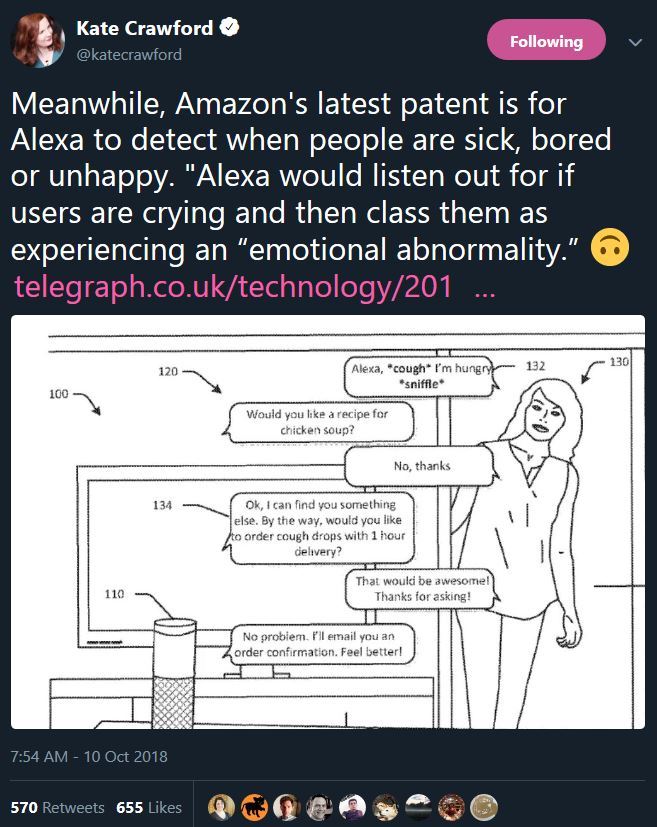
Y’all need to have a greater degree of 1- healthy suspicion in Alexa and corporate surveillance devices personal assistants, and 2- understanding of how dangerous this kind of algorithm is in the hands of a multinational company (and anyone for that matter.)
To begin with, that data is both available for sale and able to be subpoenaed by the government. Alexa’s records and recordings have already been used in criminal trials. In the US, a digital record of your emotional patterns can be used to deny you housing, jobs, and to rule on your ability to exercise your basic rights. Consider that psychiatric stigma and misdiagnosis can already be wielded against you in legal disputes and the notion of a listening device capable of identifying signs of distress for the purpose of marketing to you should be made more clearly concerning.
Moreover we have already seen the use of algorithms like this on Facebook and other “self-reporting” (read: user input) sites capable of identifying the onset of a manic episode [1][2][3], which have been subsequently been linked to identifying vulnerable (high-spending) periods to target ads at these users, perhaps most famously in selling tickets to Vegas (identified in a TedTalk by techno-sociological scholar Zeynep Tufekci where she more generally discusses algorithms and how they shape our online experiences to suggest and reinforce biases).
The notes on this post are super concerning- we are being marketed to under the guise of having our emotional needs attended to by the same people who inflicted that emptiness on us, and everyone is just memeing.
I was in 1st/2nd grade grade when the big Pokémon boom of the late 90s-early 00s happened. It was HUGE. Every kid was into it and we’d watch the show and play pretend and collect the cards and bring our game boys to school to trade Pokémon during recess. I was lucky to have supportive parents, but I remember how teachers and other adults would scoff and say how tired they were of Pokémon, how annoying and juvenile it was and how they couldn’t wait for us to “get over it already”. I might have been young, but I still remember how much these kinds of comments bummed me out. Why in the world are we being mean to little kids who like Fortnite
Why are you comparing pokemon to fortnite???
Because… Fortnite is very popular amongst children at the moment? And there are adults who dismiss it in the same way other adults did when Pokémon was big, calling it stupid, saying the dances are annoying, how much they can’t wait for the “fad to be over”, etc. It’s pretty much the same scenario.
Fortnite has a lootbox system that is glorified gambling, and can cause patterns of addiction in even adult minds, and that is in fact its intended goal in order for the game to make money from microtransactions. That’s how all games with lootboxes function. That’s how they draw in their customer base and squeeze more money out of them.
Like, I don’t judge kids who enjoy Fortnite. My little cousin plays Fortnite.
But last week, my little cousin also stole his mother’s credit card and spent about a month’s salary on microtransactions without his parents’ knowledge.
Modern gaming has become vile and predatory in ways that we didn’t have to deal with as children.
And we shouldn’t be mean to children about this, but we should definitely be coming down on these companies like a pile of fucking bricks.
let kids have their fun dances but also like fuck the corporation that made it








 sky's stuff